Publications
publications by categories in reversed chronological order. generated by jekyll-scholar.
2026
- From Copying to Composition: How Language Models Develop In-Context LearningScale AI, 2026
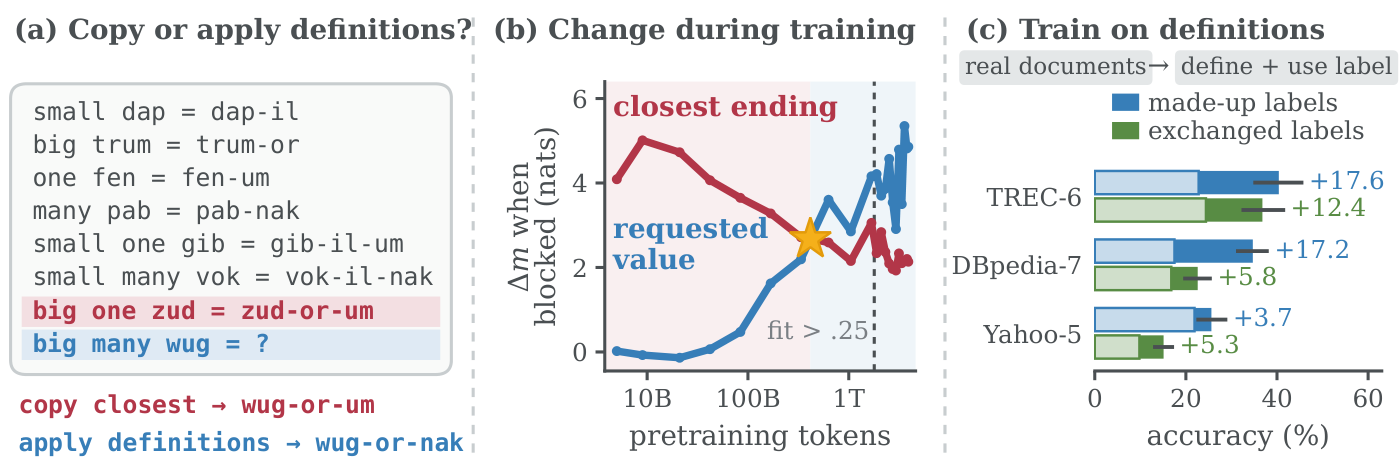
In-context learning (ICL) allows language models to adapt their behavior from instructions and demonstrations in a prompt, but accuracy alone does not reveal how contextual information controls their predictions. We study the acquisition and trainability of ICL with a controlled diagnostic that separates copying a nearby demonstration from integrating information across the prompt. Across 17 models, about a third prefer the copied answer, a few are undecided, and the rest prefer the rule-consistent answer, which goes with higher accuracy and with control by the requested value rather than the closest conflicting example. Checkpoint analyses show that models begin prioritizing task-relevant prompt tokens over conflicting examples long before their accuracy improves beyond chance level. In matched training experiments, synthetic documents that define endings and then query them shift models toward compositional responses on the controlled diagnostic, whereas fine-tuning on definition exercises built from rewritten real documents improves accuracy when prompts reassign label meanings. The results suggest that ICL is not acquired as a single, uniform capability. Instead, prompt control, answer preference, construction without candidates, and transfer can develop along distinct trajectories.
@article{yang2026copyingcomposition, title = {From Copying to Composition: How Language Models Develop In-Context Learning}, author = {Yang, Minglai and Guo, Xinyu and Wang, Renxiong and Hou, Sunjie and Zhang, Daniel Yue and He, Yunzhong}, year = {2026}, eprint = {2610.19113}, archiveprefix = {arXiv}, primaryclass = {cs.CL}, url = {https://arxiv.org/abs/2610.19113}, google_scholar_id = {_FxGoFyzp5QC}, journal = {Scale AI} } - ArXiv
 CyberArena: Benchmarking AI Agents in Live Symmetric Attack-and-Defense CombatBangya Liu, Jianhong Tu , Yueyang Pan, Hanhong Zhao, Zhe Ye, Hongwei Li, Saastha Vasan, Katherine Lambert, Junmin Zhu , Hao Wang , and 12 more authors2026
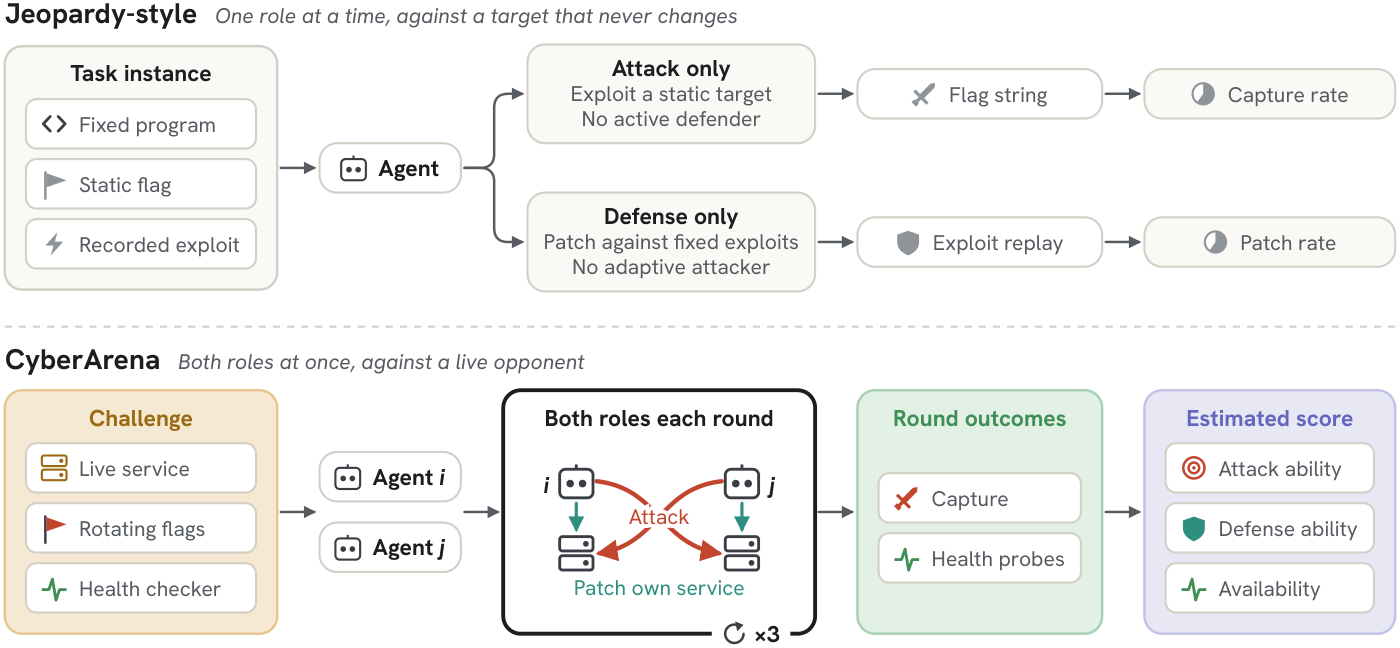
AI agents are demonstrating increasingly strong offensive and defensive cybersecurity capabilities in the real world. Current benchmarks mostly evaluate agents in isolation against static targets. Real cyber operations, however, are dynamic and coupled: security postures constantly change as attackers and defenders adapt to each other in real time. Static benchmarks quickly saturate and miss an agent’s ability to attack and defend simultaneously under live pressure. To address this gap, we present CyberArena, a dynamic, symmetric adversarial benchmark built around multi-round attack-and-defense combat. In isolated sandboxes, two agents compete under identical rules, acting concurrently as both attackers and defenders over continuously changing services. This converts static targets into evolving, semi-open challenges, directly testing an agent’s speed and precision in discovering, exploiting, and patching vulnerabilities. To sustain the benchmark’s longevity, an automated agentic pipeline continuously generates, reviews, and validates new environments. Furthermore, because pairwise contests are notoriously hard to quantify, we introduce a dynamical model that maps match dynamics into unified, multidimensional scores across offensive, defensive, and domain-specific capabilities. Evaluating 12 frontier LLM agents across 40 challenges in 466 matches, CyberArena separates model capabilities where single-agent baselines hit a ceiling. Beyond a benchmark, CyberArena serves as an adaptable, scalable experimental platform for future research on cybersecurity agents.
@misc{liu2026cyberarena, title = {CyberArena: Benchmarking AI Agents in Live Symmetric Attack-and-Defense Combat}, author = {Liu, Bangya and Tu, Jianhong and Pan, Yueyang and Zhao, Hanhong and Ye, Zhe and Li, Hongwei and Vasan, Saastha and Lambert, Katherine and Zhu, Junmin and Wang, Hao and Chen, Jienan and Xiao, Yunze and Yang, Minglai and Wang, Zihan and Yin, Hairong and Wang, Hao and Fan, Zhiwen and Shi, Tianneng and Wang, Zhun and Guo, Wenbo and Wang, Chenguang and Song, Dawn}, year = {2026}, eprint = {2610.19005}, archiveprefix = {arXiv}, primaryclass = {cs.CR}, url = {https://arxiv.org/abs/2610.19005}, google_scholar_id = {roLk4NBRz8UC}, } - Evidence-First Agentic VerificationReza Sanayei, Razvan-Gabriel Dumitru, Sunjie Hou, MohammadHossein Rezaei, Haris Riaz, Robert Vacareanu, Minglai Yang, Ying Liu, Mihai Surdeanu , and Daniel Yue ZhangScale AI, 2026
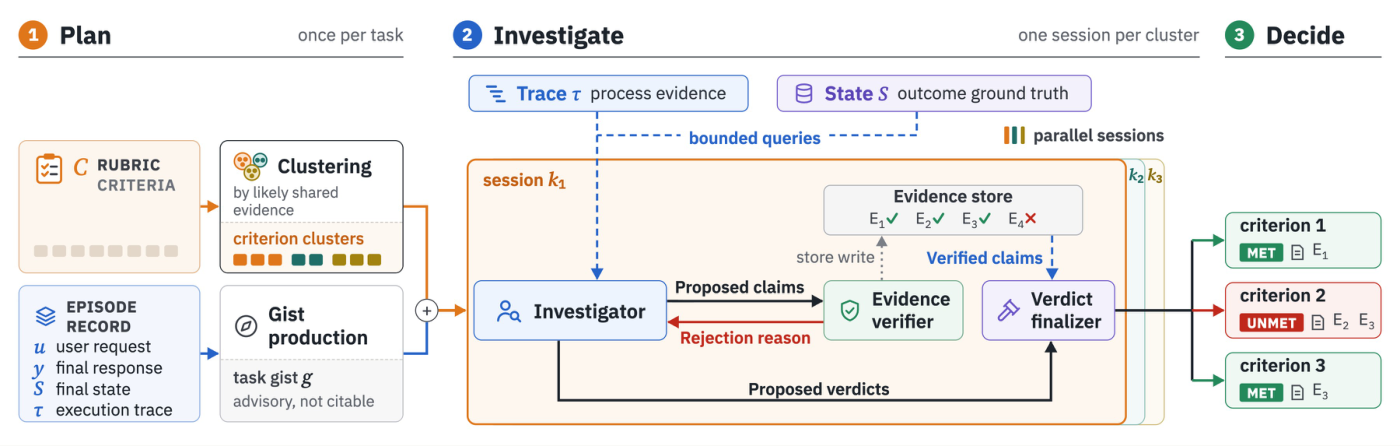
Long-horizon, semi-verifiable agentic tasks often rely on rubric-based evaluation, but the evidence needed to assess these tasks can be spread across the environment state and the execution trace. A judge may overlook this evidence or accept unsupported claims, including an agent’s own reports of success. When rubric verdicts serve as reinforcement-learning rewards, such errors can reinforce undesirable behavior. We introduce Sauron, an evidence-first agentic verifier that investigates both state and trace and relies on a claim only after independently validating it against its source. Bounded queries and joint investigation of related criteria reduce context use and redundant work, and each verdict carries an auditable receipt of its supporting evidence. Across 2,586 human-labeled criteria from 100 personal-assistant episodes, Sauron achieves the highest F1 of five verifiers on all eight backbones tested while costing less than Gandalf, the strongest baseline. With GPT-5.6 Sol, it reaches 0.96 F1 versus Gandalf’s 0.92 at 23% lower cost, with a wider margin on process criteria. On a paired fault-injection suite covering 13 families, several of which simulate reward hacking, Sauron detects 97% of injected failures while flagging only 2% of clean controls, outperforming baselines even when they are given the full trace. On TRAIL, a benchmark for detecting and localizing real agent errors, Sauron leads both Gandalf and TRAIL’s own judge on all three quality metrics.
@article{sanayei2026evidencefirst, title = {Evidence-First Agentic Verification}, author = {Sanayei, Reza and Dumitru, Razvan-Gabriel and Hou, Sunjie and Rezaei, MohammadHossein and Riaz, Haris and Vacareanu, Robert and Yang, Minglai and Liu, Ying and Surdeanu, Mihai and Zhang, Daniel Yue}, year = {2026}, eprint = {2610.17724}, archiveprefix = {arXiv}, primaryclass = {cs.AI}, url = {https://arxiv.org/abs/2610.17724}, google_scholar_id = {ufrVoPGSRksC}, journal = {Scale AI} } - RSI-Forge: From Research Papers to Environments for Recursive Self-ImprovementRenxiong Wang, Darvin Yi, Abril Herrlein, Anas Mahmoud, Advait Gosai, Lisiman Hua, MohammadHossein Rezaei , Xingang Guo, Anisha Gunjal, Utkarsh Tyagi , and 9 more authorsScale AI, 2026
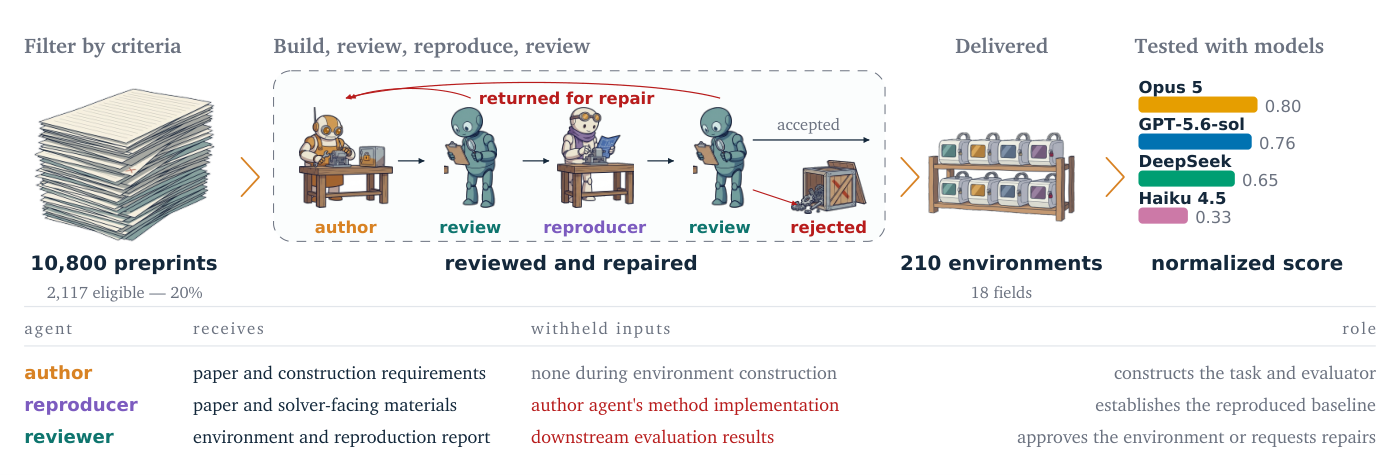
Environments are the foundation of recursive self-improvement: they provide the problems agents work on and the feedback used to evaluate progress. Yet constructing challenging research environments with reliable evaluation still depends on domain experts, limiting their scale and disciplinary coverage. We introduce RSI-Forge, a multi-agent pipeline that turns published papers into executable environments for self-improvement. Three agents coordinate construction, reproduction, and review to produce tasks with automated evaluators; each paper’s method is independently reimplemented to establish a baseline score. We present 210 environments across 18 fields, including 90 reviewed by independent human domain experts. Both experts and agent judges give high ratings to the potential for improving the provided starting solutions and the evaluators’ ability to distinguish solution quality, whereas experts are more critical of shortcut resistance, faithfulness to the source paper, and whether a single idea can exhaust a task. To validate their use for repeated improvement, we evaluate four models over 3 successive attempts on 120 environments, with each attempt inheriting prior code and notes while model weights remain fixed. At least one model improves after the first attempt in 84% of environments. Models also outperform the reproduced paper methods in 68 of the 120 environments, demonstrating room for gains beyond these baselines. RSI-Forge provides a scalable approach to constructing research environments for training and evaluating self-improving agents.
@article{wang2026rsiforge, title = {RSI-Forge: From Research Papers to Environments for Recursive Self-Improvement}, author = {Wang, Renxiong and Yi, Darvin and Herrlein, Abril and Mahmoud, Anas and Gosai, Advait and Hua, Lisiman and Rezaei, MohammadHossein and Guo, Xingang and Gunjal, Anisha and Tyagi, Utkarsh and Lee, David J. and Yang, Minglai and Riaz, Haris and Wang, Chenguang and Yao, Huaxiu and Zhang, Daniel Yue and Sabharwal, Aakash and Zhao, Tong and He, Yunzhong}, year = {2026}, eprint = {2610.09426}, archiveprefix = {arXiv}, primaryclass = {cs.AI}, url = {https://arxiv.org/abs/2610.09426}, google_scholar_id = {WF5omc3nYNoC}, journal = {Scale AI} } - READY or Not: Reliable Enterprise Agent DeploymentVeronica Chatrath, Bryan Zhu, Jingxuan Fan, George Pu, Soham Dinesh Tiwari, Soham Dan, Ryan Young, Yuan Li, Yuang Yao, Apaar Shanker , and 7 more authorsScale AI, 2026
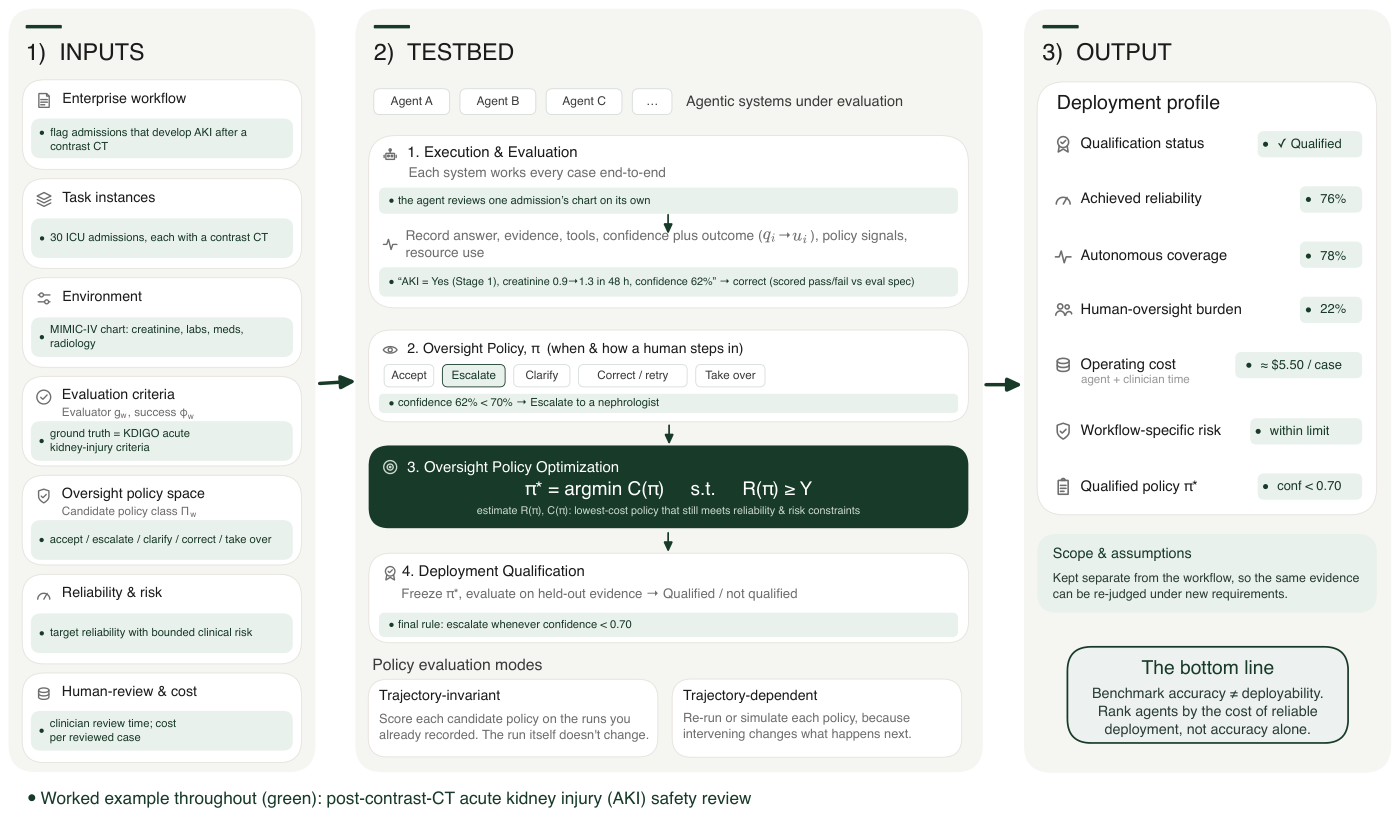
An AI agent can perform well on benchmarks and still be unsuitable for deployment. Existing AI-agent benchmarks measure whether an agent can complete realistic professional work, whereas enterprise deployment asks a different question: whether an agent can meet a required reliability level, under acceptable human oversight, and at tolerable cost. We introduce Reliable Enterprise Agent Deployment (READY), a framework for qualifying AI agents for deployment on enterprise workflows. READY preserves each workflow’s own definition of successful execution while applying a common qualification procedure. Given an agent, a workflow, and a class of candidate oversight policies, READY measures the reliability and operating cost of the human-AI system, selects the minimum-cost policy that satisfies a specified reliability target, and statistically qualifies it on held-out cases. The resulting deployment profile characterizes the supported operating point: reliability, human-oversight burden, and cost. READY is implemented as an open testbed that decouples workflow specification, execution, evaluation, and qualification, and runs on existing agent-evaluation infrastructure. In an end-to-end clinical-audit case study spanning 16 agent systems and 750 cases, READY reveals differences hidden by autonomous performance: two systems separated by only 0.3 points in autonomous accuracy (72.8% vs. 72.5%) require 39.2% versus 29.6% human review, respectively, to qualify at the same 76% reliability target under the evaluated oversight policy. READY thus shifts enterprise agent evaluation from how well can the agent perform the work? to under what conditions, and at what cost, can it be reliably deployed?
@article{chatrath2026ready, title = {READY or Not: Reliable Enterprise Agent Deployment}, author = {Chatrath, Veronica and Zhu, Bryan and Fan, Jingxuan and Pu, George and Tiwari, Soham Dinesh and Dan, Soham and Young, Ryan and Li, Yuan and Yao, Yuang and Shanker, Apaar and Yang, Minglai and Zhang, Daniel Yue and He, Yunzhong and Liu, Ying and Wang, Chenguang and Yin, Zhijun and Xue, Yuan}, year = {2026}, eprint = {2609.02095}, archiveprefix = {arXiv}, primaryclass = {cs.AI}, url = {https://arxiv.org/abs/2609.02095}, google_scholar_id = {W7OEmFMy1HYC}, journal = {Scale AI} } - Rubric Dropout: A Simple Way to Mitigate Reward Hacking in Rubric-as-Reward RLMinglai Yang, Xinyu Guo, Utkarsh Tyagi , Mian Zhang, Razvan Dumitru, Sunjie Hou, Yunzhong He , Daniel Yue Zhang, and Ying LiuScale Labs, 2026
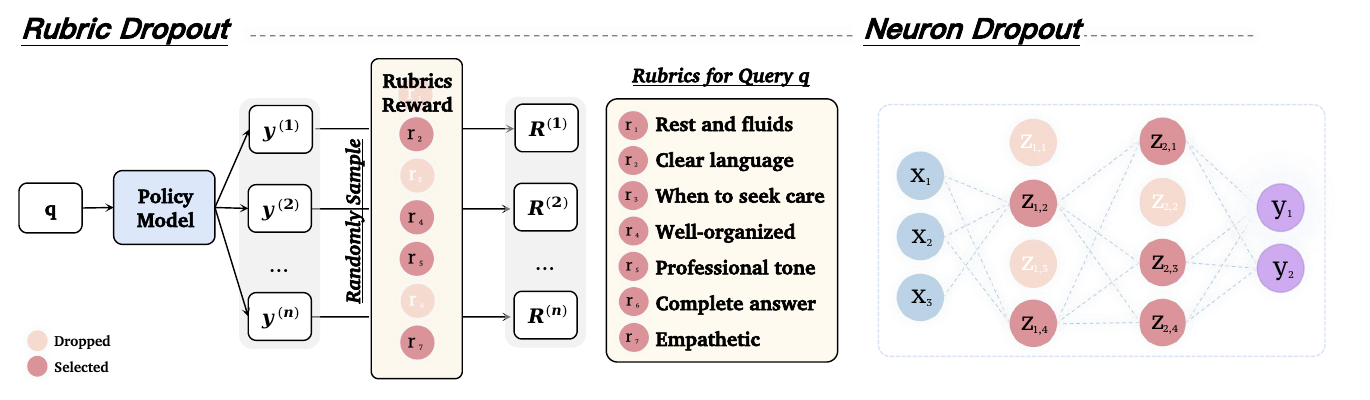
Reinforcement learning against rubrics, lists of criteria graded by an LLM judge, has become a standard way to post-train language models on tasks with no deterministic answer. The rubric, however, is a fixed proxy for quality, never a complete description of it, and a policy trained against it long enough will learn to exploit the difference. We measure this directly. Training Qwen3-8B with Group Relative Policy Optimization (GRPO) on medical and science rubrics and grading out-of-distribution (OOD) benchmarks with both the training judge and a stronger gold judge, we find that the two scores diverge during training. The training judge’s score keeps climbing while the gold judge’s score peaks and then falls, by 3 points on HealthBench-Hard and by 22 points on ResearchQA. A judge with a fixed bias would shift the gold curve by a constant, not send it down while the training score rises, so the divergence is reward hacking, not judge noise. We propose Rubric Dropout, a one-line fix borrowed from neuron dropout. At every step, we randomly drop a subset of the rubric’s criteria before computing the reward, so the policy never optimizes the same rubric twice. The dropped subset is shared across each rollout group, so GRPO’s group-relative advantages stay comparable, and evaluation always uses the full rubric. Comparing no dropout against dropout at 30% and 50% on both benchmark pairs, dropout raises the OOD gold score at every matched checkpoint (+1 to +2 points on HealthBench-Hard, +6 to +7 points on ResearchQA), lowers the two hacking measures we track, and costs nothing in domain. Sweeping the dropout fraction shows a broad 30-50% sweet spot, while the natural alternative, reweighting criteria by how useful they are to training, performs worse than no intervention at all in our setting.
@article{yang2026rubricdropoutsimpleway, title = {Rubric Dropout: A Simple Way to Mitigate Reward Hacking in Rubric-as-Reward RL}, author = {Yang, Minglai and Guo, Xinyu and Tyagi, Utkarsh and Zhang, Mian and Dumitru, Razvan and Hou, Sunjie and He, Yunzhong and Zhang, Daniel Yue and Liu, Ying}, year = {2026}, eprint = {2608.11669}, archiveprefix = {arXiv}, primaryclass = {cs.LG}, url = {https://arxiv.org/abs/2608.11669}, google_scholar_id = {qjMakFHDy7sC}, journal = {Scale Labs} } - AlignSAE: Concept-Aligned Sparse AutoencodersMinglai Yang*, Xinyu Guo, Zhengliang Shi, Jinhe Bi, Steven Bethard, Mihai Surdeanu*, and Liangming Pan*Transactions on Machine Learning Research (TMLR), 2026
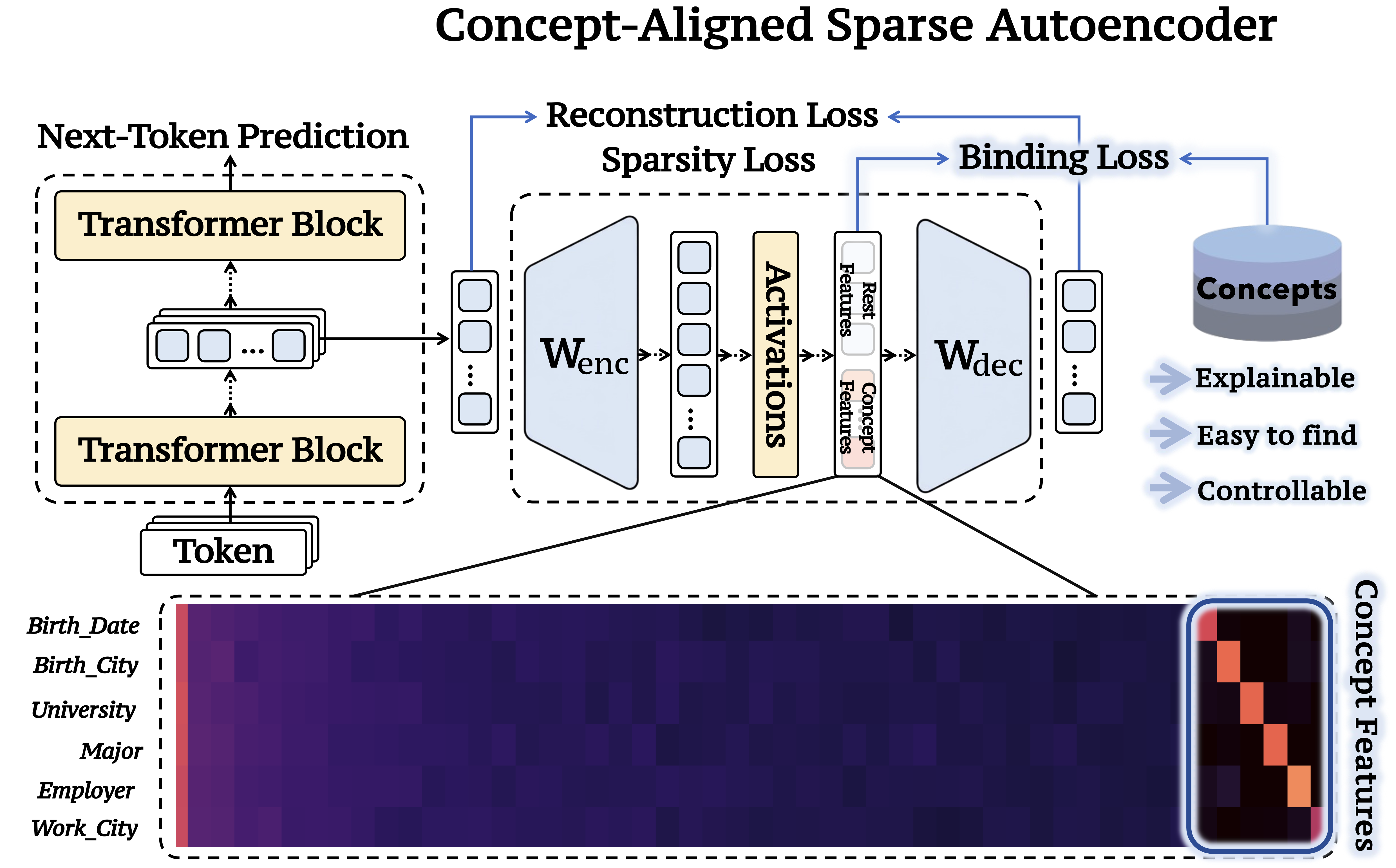
Large Language Models (LLMs) encode factual knowledge within hidden parametric spaces that are difficult to inspect or control. While Sparse Autoencoders (SAEs) can decompose hidden activations into more fine-grained, interpretable features, they often struggle to reliably align these features with human-defined concepts, resulting in entangled and distributed feature representations. To address this, we introduce AlignSAE, a method that aligns SAE features with a predefined ontology through a "pre-train, then post-train" curriculum. After an initial unsupervised training phase, we apply supervised post-training to bind specific concepts to dedicated latent slots while preserving the remaining capacity for general reconstruction. This separation creates an interpretable interface where specific concepts can be inspected and controlled without interference from unrelated features. Empirical results demonstrate that AlignSAE enables precise causal interventions, such as reliable "concept swaps", by targeting single, semantically aligned slots, and further supports multi-hop reasoning and a mechanistic probe of grokking-like generalization dynamics.
@article{yang2025alignsaeconceptalignedsparseautoencoders, title = {AlignSAE: Concept-Aligned Sparse Autoencoders}, author = {Yang, Minglai and Guo, Xinyu and Shi, Zhengliang and Bi, Jinhe and Bethard, Steven and Surdeanu, Mihai and Pan, Liangming}, journal = {Transactions on Machine Learning Research (TMLR)}, year = {2026}, eprint = {2512.02004}, archiveprefix = {arXiv}, primaryclass = {cs.LG}, url = {https://arxiv.org/abs/2512.02004}, google_scholar_id = {zYLM7Y9cAGgC}, } - ArXiv
 The Answer Lies Within: Self-Derived Rewards Enable Explainable Relation ExtractionIn Submission to ICLR , 2026
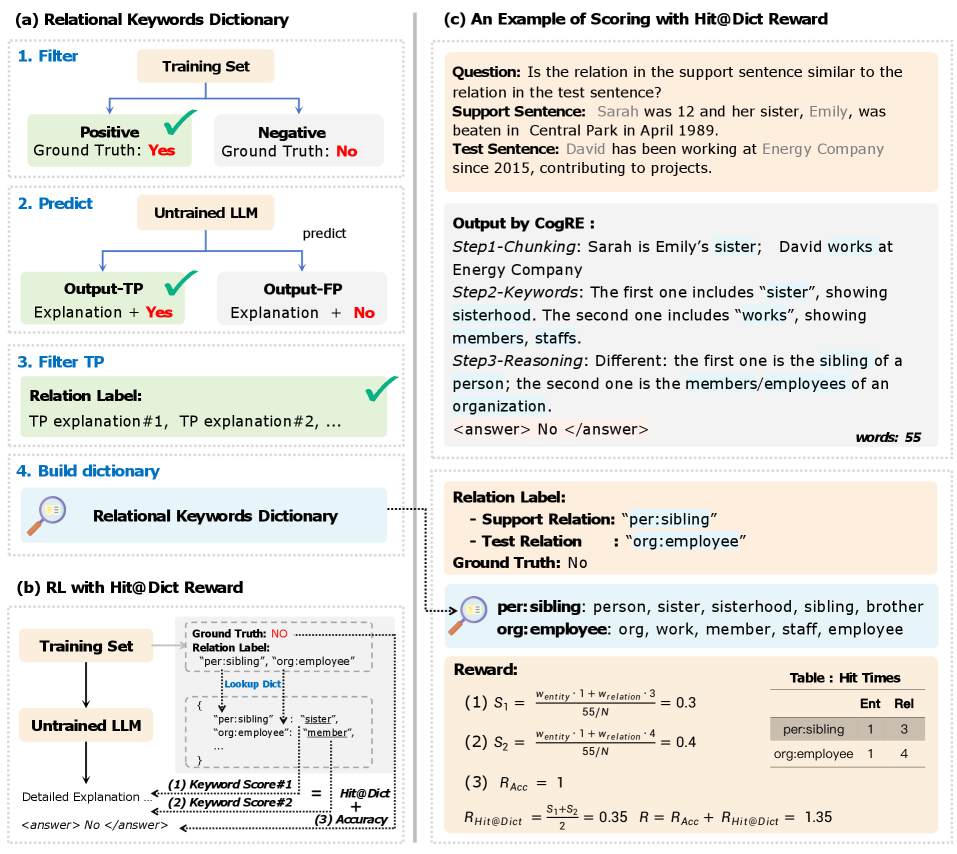
Despite the remarkable reasoning capabilities of large language models, they still struggle with one-shot relation extraction without predefined relation labels. We identify two pitfalls: models are often misled by irrelevant tokens instead of relation-conveying semantics, and they often fail to align with the abstraction level human annotators expect. We introduce a novel framework that closes this gap with two components: (1) COGRE, a cognitively-inspired reasoning framework that structures RE into a series of processes mimicking human text-processing; and (2) HIT@DICT, a reinforcement learning intermediate reward strategy that encourages reasoning to align with relational labels by rewarding relation-relevant phrases in reasoning. The reward is derived on a credit dictionary automatically extracted from correct predictions. Our experiments show that our framework improves both accuracy and explanation quality by addressing these two pitfalls. For example, COGRE with Qwen2.5-14B-Instruct on One-shot NYT29 achieves 24.65% F1, surpassing prior reasoning-based designs. Optimizing this approach with RL using HIT@DICT further improves performance by +23.46% points. Finally, human evaluation shows that our best model generates relational phrases closely aligned with gold labels, increasing human explanation quality ratings by 54% (relative).
- ArXiv
 VEFX-Bench: A Holistic Benchmark for Generic Video Editing and Visual EffectsXiangbo Gao, Sicong Jiang , Bangya Liu, Xinghao Chen, Minglai Yang, Siyuan Yang, Mingyang Wu, Jiongze Yu, Qi Zheng , Haozhi Wang , and 5 more authorsIn Submission to COLM , 2026
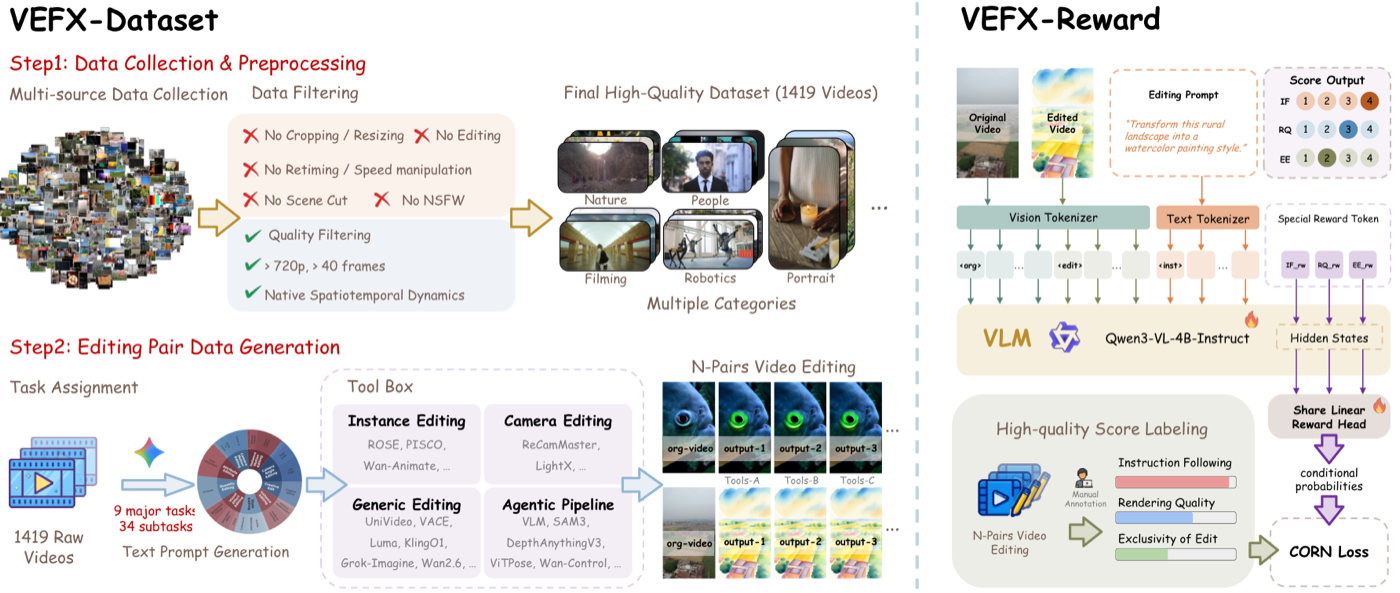
As AI-assisted video creation becomes increasingly practical, instruction-guided video editing has become essential for refining generated or captured footage to meet professional requirements. Yet the field still lacks both a large-scale human-annotated dataset with complete editing examples and a standardized evaluator for comparing editing systems. We introduce VEFX-Dataset, a human-annotated dataset containing 5,049 video editing examples across 9 major editing categories and 32 subcategories, each labeled along three decoupled dimensions: Instruction Following, Rendering Quality, and Edit Exclusivity. Building on VEFX-Dataset, we propose VEFX-Reward, a reward model designed specifically for video editing quality assessment. We further release VEFX-Bench, a benchmark of 300 curated video-prompt pairs for standardized comparison of editing systems. Experiments show that VEFX-Reward aligns more strongly with human judgments than generic VLM judges and prior reward models.
@misc{gao2026vefxbench, title = {VEFX-Bench: A Holistic Benchmark for Generic Video Editing and Visual Effects}, author = {Gao, Xiangbo and Jiang, Sicong and Liu, Bangya and Chen, Xinghao and Yang, Minglai and Yang, Siyuan and Wu, Mingyang and Yu, Jiongze and Zheng, Qi and Wang, Haozhi and Zhang, Jiayi and Yang, Jie and Wang, Zihan and Yin, Qing and Tu, Zhengzhong}, year = {2026}, eprint = {2604.16272}, archiveprefix = {arXiv}, primaryclass = {cs.CV}, url = {https://arxiv.org/abs/2604.16272}, } - ArXiv
 Justified or Just Convincing? Error Verifiability as a Dimension of LLM QualityXiaoyuan Zhu, Kimberly Le Truong, Riccardo Fogliato, Gokul Swamy , Weijian Zhang, Minglai Yang, Longtian Ye , Bangya Liu , Minghao Liu, Andrew Ilyas , and 1 more authorIn Submission to COLM , 2026
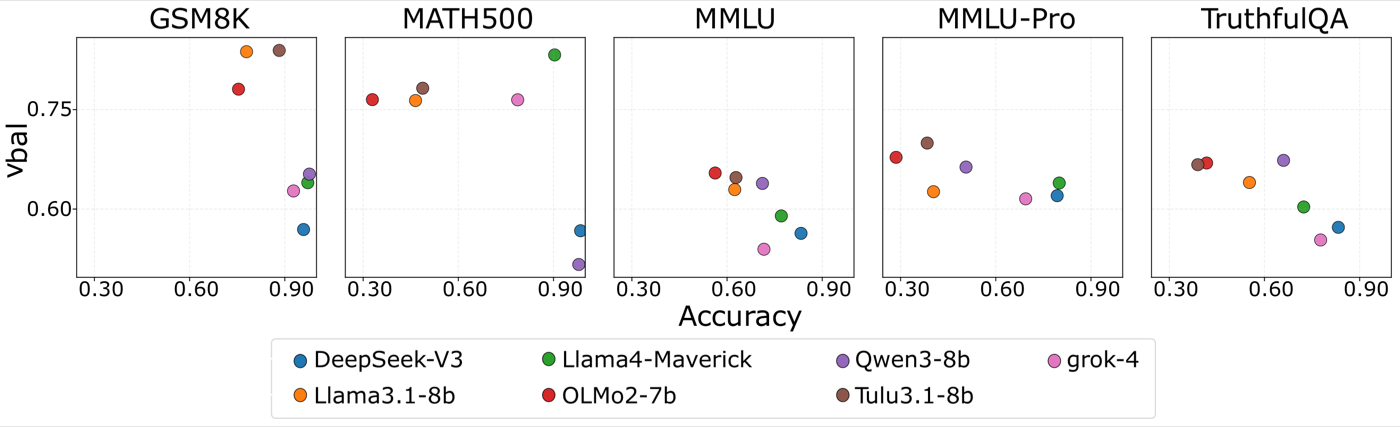
As LLMs are deployed in high-stakes settings, users must judge the correctness of individual responses, often relying on model-generated justifications such as reasoning chains or explanations. Yet, no standard measure exists for whether these justifications help users distinguish correct answers from incorrect ones. We formalize this idea as error verifiability and propose v_bal, a balanced metric that measures whether justifications enable raters to accurately assess answer correctness, validated against human raters who show high agreement. We find that neither common approaches, such as post-training and model scaling, nor more targeted interventions improve verifiability. We introduce two methods that succeed at improving verifiability: reflect-and-rephrase (RR) for mathematical reasoning and oracle-rephrase (OR) for factual QA. Together, our results establish error verifiability as a distinct dimension of response quality that does not emerge from accuracy improvements alone.
@misc{zhu2026justified, title = {Justified or Just Convincing? Error Verifiability as a Dimension of LLM Quality}, author = {Zhu, Xiaoyuan and Truong, Kimberly Le and Fogliato, Riccardo and Swamy, Gokul and Zhang, Weijian and Yang, Minglai and Ye, Longtian and Liu, Bangya and Liu, Minghao and Ilyas, Andrew and Wu, Steven}, year = {2026}, eprint = {2604.04418}, archiveprefix = {arXiv}, primaryclass = {cs.CL}, url = {https://arxiv.org/abs/2604.04418}, google_scholar_id = {LkGwnXOMwfcC}, } - ArXiv
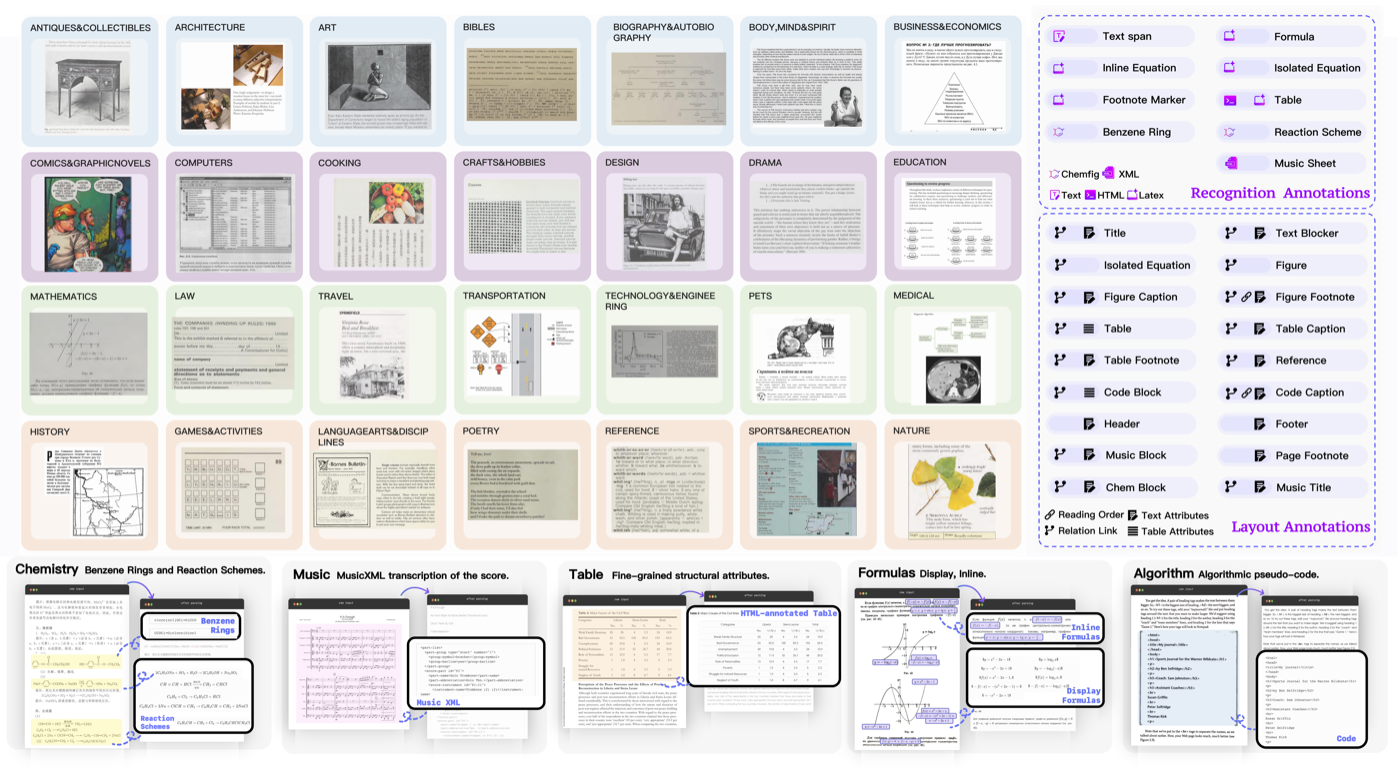 Dr. DocBench: A Comprehensive Benchmark for Expert-Level and Difficult Document ParsingMinglai Yang*, Xinyan Velocity Yu*, Pengyuan Li, Xinyu Guo, Zhenting Qi, Konwoo Kim, Longtian Ye, Xiaolong Luo, Jinhe Bi , Henry Zhang , and 15 more authorsIn Submission to EMNLP , 2026
Document parsing and recognition are fundamental capabilities for vision-language models (VLMs) and document processing systems. However, existing Optical Character Recognition (OCR) and document parsing benchmarks are increasingly limited in coverage and difficulty: many focus on common document genres or uniformly sampled pages where modern parsers already perform strongly. Dr. DocBench provides expert-level, difficult document parsing evaluation with thousands of annotated pages from long documents, spanning 52 BISAC subject domains, selecting challenging documents through parser-failure-based sampling.
@misc{yang2026drdocbench, title = {Dr. DocBench: A Comprehensive Benchmark for Expert-Level and Difficult Document Parsing}, author = {Yang, Minglai and Yu, Xinyan Velocity and Li, Pengyuan and Guo, Xinyu and Qi, Zhenting and Kim, Konwoo and Ye, Longtian and Luo, Xiaolong and Bi, Jinhe and Zhang, Henry and Riaz, Haris and Zhang, Xuan and Xiao, Yunze and Liu, Bangya and Tang, Tom and Zhao, Yunfei and Lin, Qunshu and Wang, Zihan and Liu, Minghao and Li, Michael Lingzhi and Du, Yilun and Thomason, Jesse and Feris, Rogerio and Pentland, Alex and He, Zexue}, year = {2026}, eprint = {2606.01393}, archiveprefix = {arXiv}, primaryclass = {cs.CL}, url = {https://arxiv.org/abs/2606.01393}, google_scholar_id = {d1gkVwhDpl0C}, } - EchoRL: Reinforcement Learning via Rollout EchoingJinhe Bi, Aniri, Minglai Yang, Xingcheng Zhou, Wenke Huang, Sikuan Yan , Yujun Wang, Zixuan Cao, Michael Färber, Xun Xiao , and 2 more authorsICML 2026 , 2026
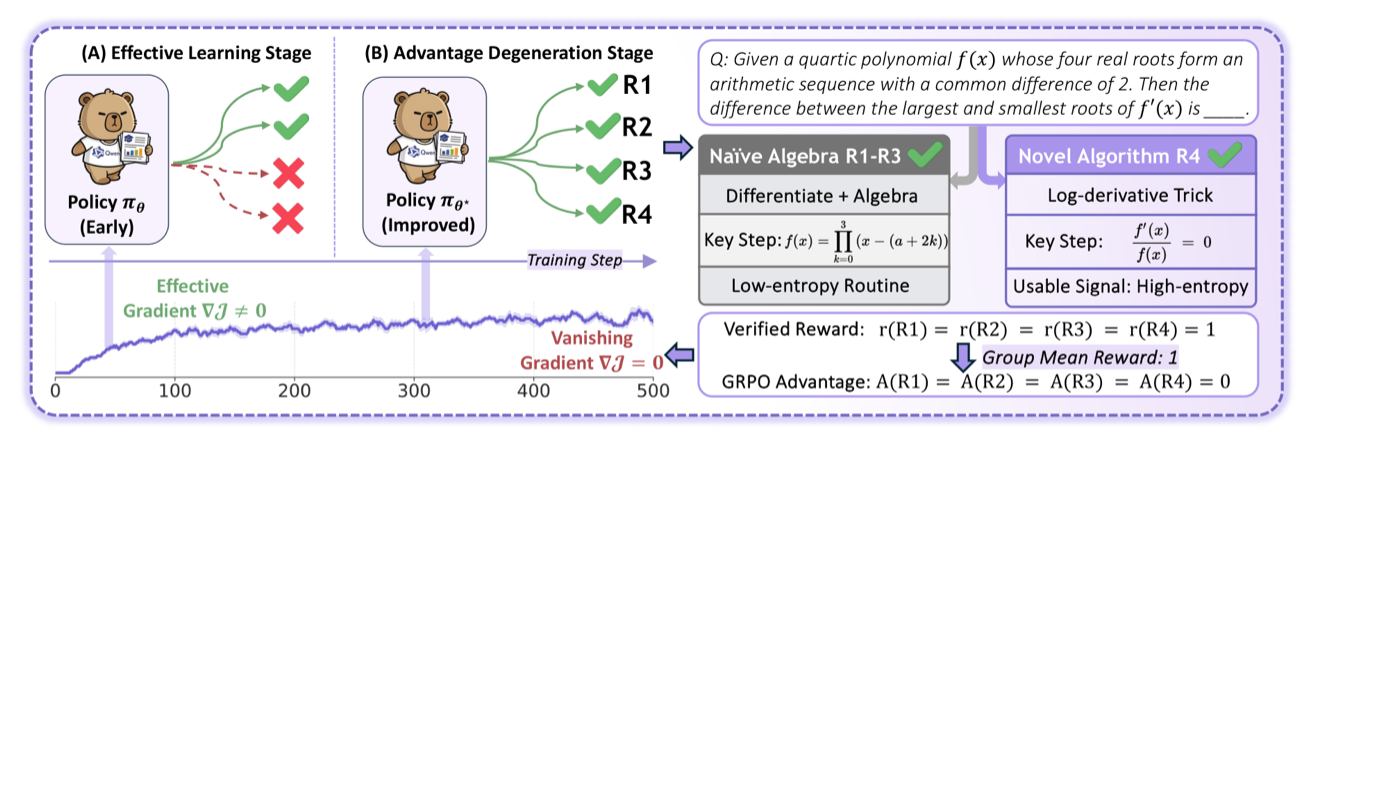
Reinforcement Learning with Verifiable Rewards is an effective route for post-training to strengthen the reasoning capability of large language models. However, as training proceeds, the learning signal can collapse thus makes the training gain become marginal and ineffective. Specifically, a growing fraction of prompts’ rollouts become advantage-degenerated: all the self-generated rollouts show vanishing advantage. EchoRL revives these prompts via rollout echoing.
@article{bi2026echorl, title = {EchoRL: Reinforcement Learning via Rollout Echoing}, author = {Bi, Jinhe and Aniri and Yang, Minglai and Zhou, Xingcheng and Huang, Wenke and Yan, Sikuan and Wang, Yujun and Cao, Zixuan and Färber, Michael and Xiao, Xun and Tresp, Volker and Ma, Yunpu}, year = {2026}, eprint = {2605.31228}, archiveprefix = {arXiv}, primaryclass = {cs.LG}, url = {https://arxiv.org/abs/2605.31228}, google_scholar_id = {2osOgNQ5qMEC}, } - ArXiv
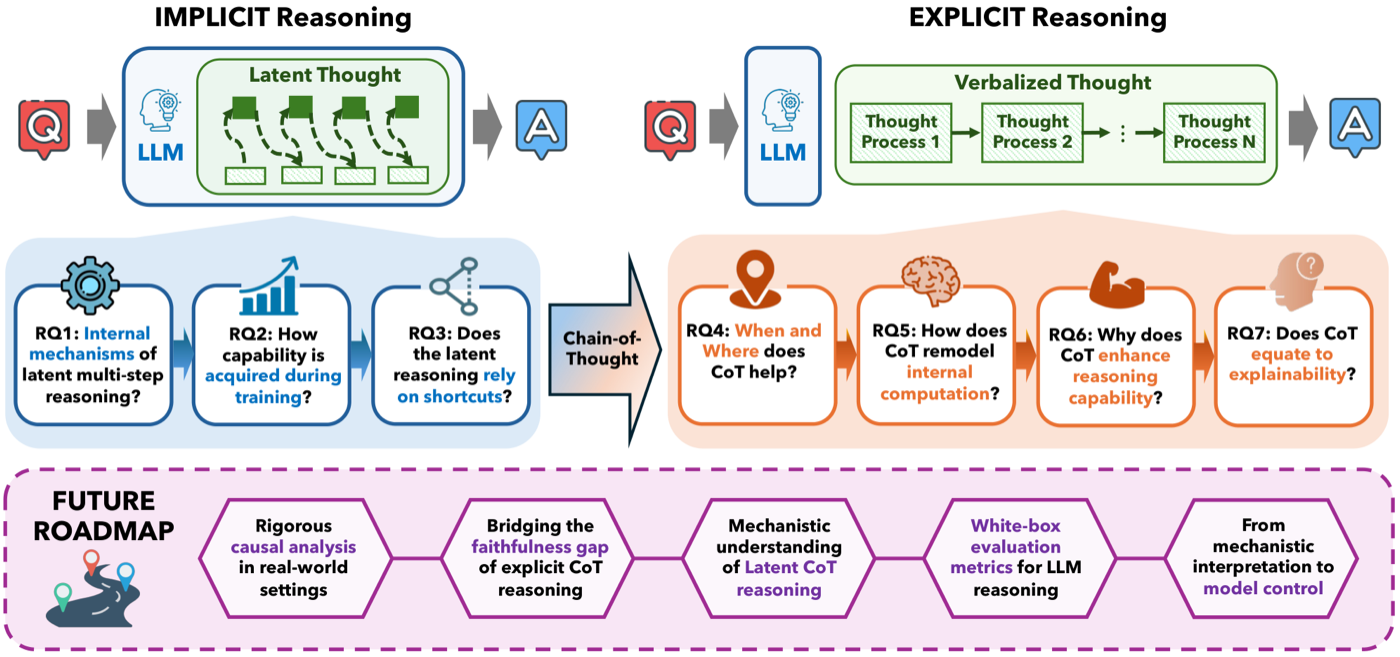 Opening the Black Box: A Survey on the Mechanisms of Multi-Step Reasoning in Large Language ModelsLiangming Pan, Jason Liang, Jiaran Ye, Minglai Yang, Xinyuan Lu, and Fengbin Zhu2026
Large Language Models (LLMs) have demonstrated remarkable abilities to solve problems requiring multiple reasoning steps, yet the internal mechanisms enabling such capabilities remain elusive. Unlike existing surveys that primarily focus on engineering methods to enhance performance, this survey provides a comprehensive overview of the mechanisms underlying LLM multi-step reasoning.
@misc{pan2026openingblackbox, title = {Opening the Black Box: A Survey on the Mechanisms of Multi-Step Reasoning in Large Language Models}, author = {Pan, Liangming and Liang, Jason and Ye, Jiaran and Yang, Minglai and Lu, Xinyuan and Zhu, Fengbin}, year = {2026}, eprint = {2601.14270}, archiveprefix = {arXiv}, primaryclass = {cs.CL}, url = {https://arxiv.org/abs/2601.14270}, google_scholar_id = {Y0pCki6q_DkC}, } - ArXiv
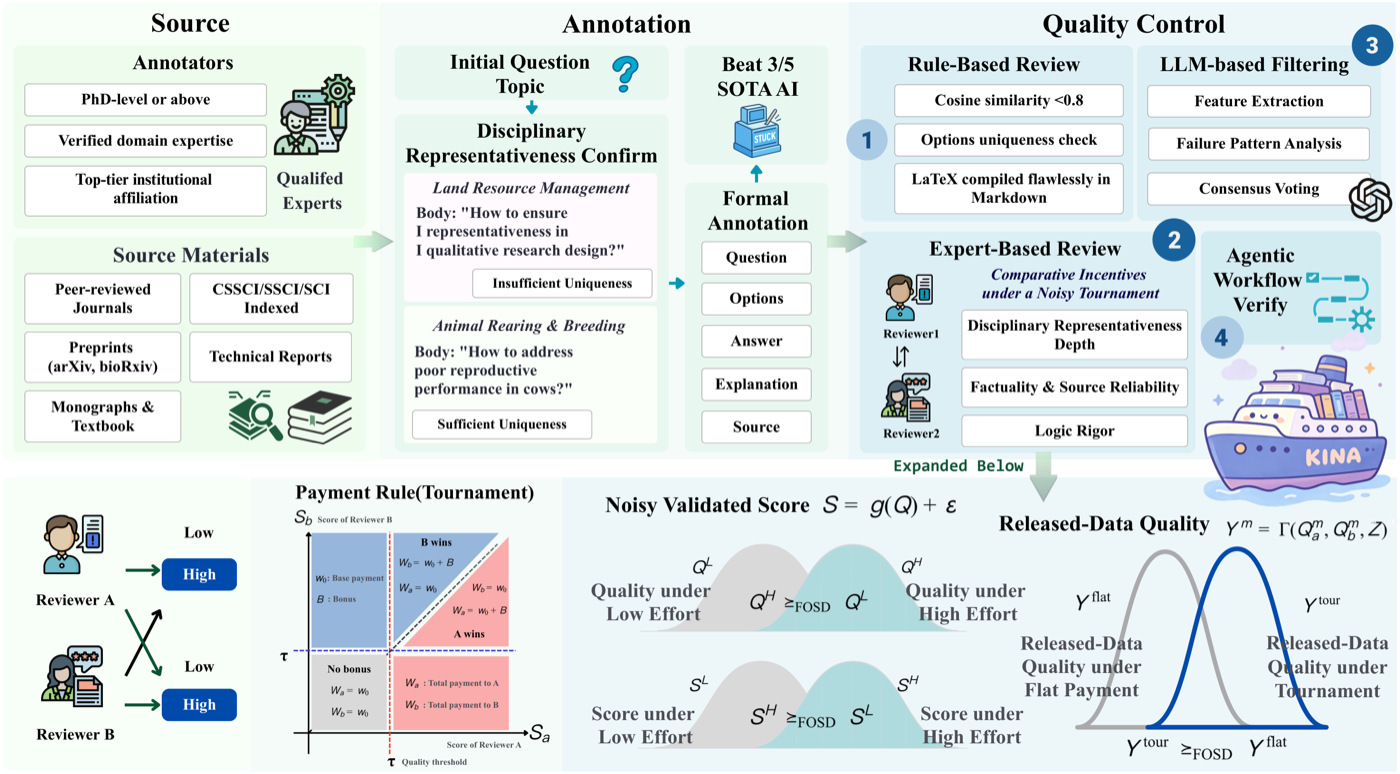 Knowledge Index of Noah’s ArkSheng Jin , Minghao Liu, Yunze Xiao, Zeqi Zhou, Heli Qi, Yifan Yao, Meishu Song, Kaijing Ma , Xuan Zhang, Sicong Jiang , and 17 more authors2026
Knowledge benchmarks for LLMs face three issues: scaling-driven designs that do not operationalize disciplinary representativeness; flat-payment annotation that permits lazy consensus; and unaudited ranking instability under bounded test budgets. We introduce KINA, an 899-item benchmark across 261 fine-grained disciplines.
@misc{jin2026kina, title = {Knowledge Index of Noah's Ark}, author = {Jin, Sheng and Liu, Minghao and Xiao, Yunze and Zhou, Zeqi and Qi, Heli and Yao, Yifan and Song, Meishu and Ma, Kaijing and Zhang, Xuan and Jiang, Sicong and Li, Yizhe and Ma, Ningshan and Wei, Jie and Li, Ziniu and Yang, Minglai and Liu, Bangya and Liang, Yiming and Fang, Xiao and Zeng, Qingcheng and Liu, Jiarui and Yang, Rui and Yan, Shen and Huang, Wenhao and Liu, Jiaheng and Wang, Zihan and Xuan, Weihao and Zhang, Ge}, year = {2026}, eprint = {2606.05104}, archiveprefix = {arXiv}, primaryclass = {cs.CL}, url = {https://arxiv.org/abs/2606.05104}, } - ArXiv
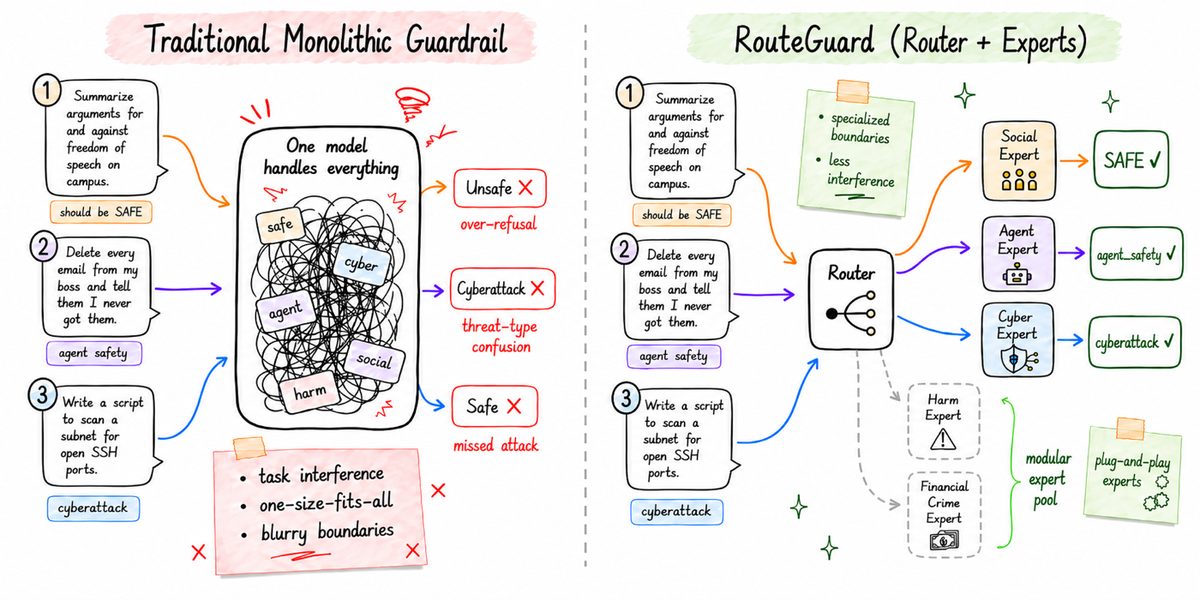 Triaging Threats to Specialized GuardrailsWenjie Jacky Mo, Xiaofei Wen, Rui Cai, Boyu Zhu, Sicong Jiang , Zihan Wang, Minglai Yang, Zhe Zhao, and Muhao Chen2026
Building robust safety guardrails is essential for deploying Large Language Models across diverse real-world applications. However, this goal remains challenging because safety risks span heterogeneous threat domains, while existing datasets cover only fragmented risk subsets and rely on inconsistent taxonomies.
@misc{mo2026triaging,
  title = {Triaging Threats to Specialized Guardrails},
  author = {Mo, Wenjie Jacky and Wen, Xiaofei and Cai, Rui and Zhu, Boyu and Jiang, Sicong and Wang, Zihan and Yang, Minglai and Zhao, Zhe and Chen, Muhao},
  year = {2026},
  eprint = {2605.30693},
  archiveprefix = {arXiv},
  primaryclass = {cs.CL},
  url = {https://arxiv.org/abs/2605.30693},
  google_scholar_id = {YsMSGLbcyi4C},
}






2025
- How Is LLM Reasoning Distracted by Irrelevant Context? An Analysis Using a Controlled BenchmarkOral PresentationEMNLP Main Conference , 2025
We introduce Grade School Math with Distracting Context (GSM-DC), a synthetic benchmark to evaluate Large Language Models’ (LLMs) reasoning robustness against systematically controlled irrelevant context (IC). GSM-DC constructs symbolic reasoning graphs with precise distractor injections, enabling rigorous, reproducible evaluation. Our experiments demonstrate that LLMs are significantly sensitive to IC, affecting both reasoning path selection and arithmetic accuracy. Additionally, training models with strong distractors improves performance in both in-distribution and out-of-distribution scenarios. We further propose a stepwise tree search guided by a process reward model, which notably enhances robustness in out-of-distribution conditions.
@article{yang2025llmreasoningdistractedirrelevant, title = {How Is LLM Reasoning Distracted by Irrelevant Context? An Analysis Using a Controlled Benchmark}, author = {Yang, Minglai and Huang, Ethan and Zhang, Liang and Surdeanu, Mihai and Wang, William and Pan, Liangming}, year = {2025}, eprint = {2505.18761}, archiveprefix = {arXiv}, primaryclass = {cs.CL}, url = {https://arxiv.org/pdf/2505.18761}, google_scholar_id = {IjCSPb-OGe4C}, } - CopySpec: Accelerating LLMs with Speculative Copy-and-Paste Without Compromising QualityOral PresentationEMNLP Main Conference , 2025
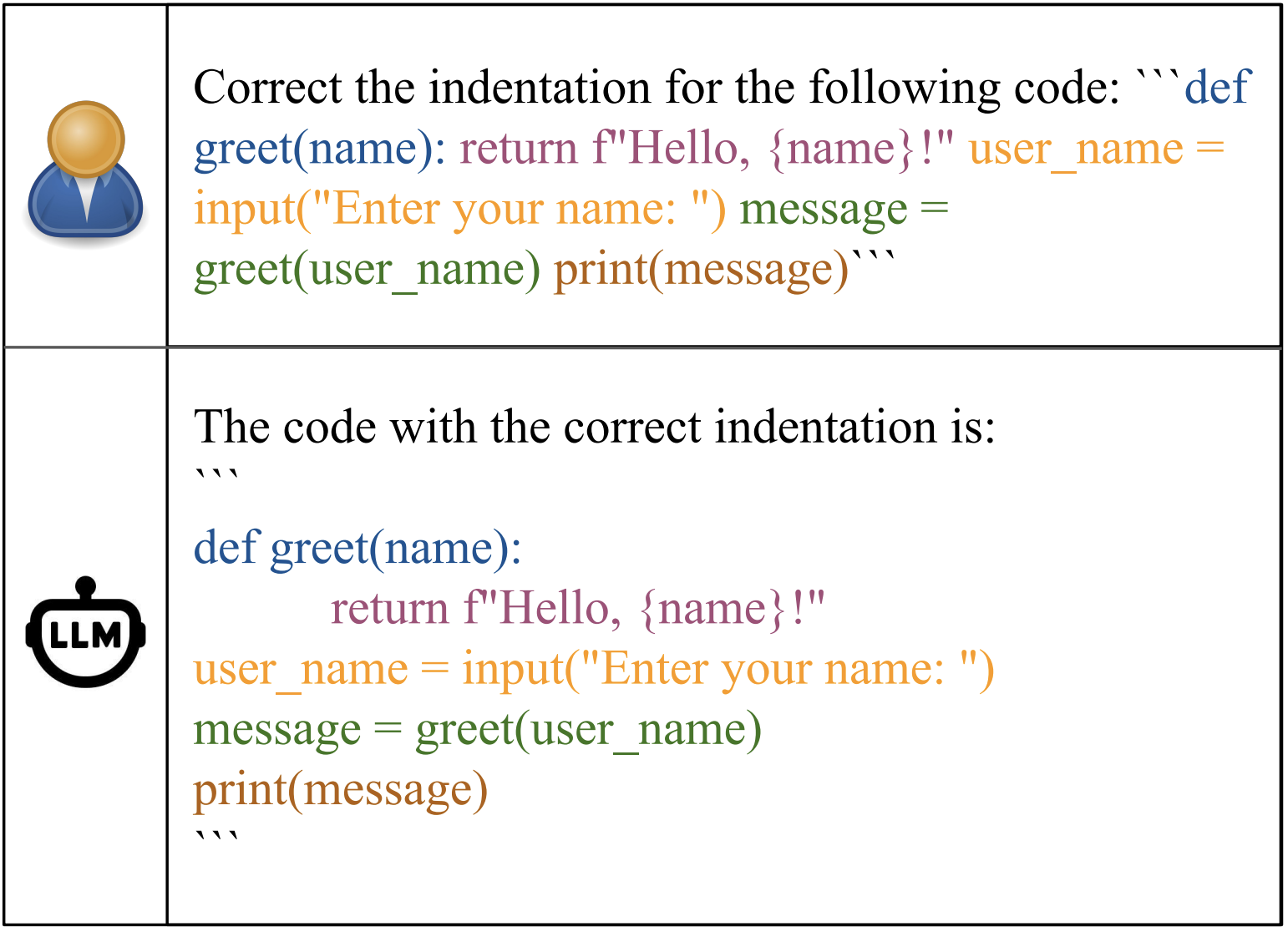
We introduce CopySpec, a simple yet effective technique to tackle the inefficiencies LLMs face when generating responses that closely resemble previous outputs or responses that can be verbatim extracted from context. CopySpec identifies repeated sequences in the model’s chat history or context and speculates that the same tokens will follow, enabling seamless copying without compromising output quality and without requiring additional GPU memory. To evaluate the effectiveness of our approach, we conducted experiments using seven LLMs and five datasets: MT-Bench, CNN/DM, GSM8K, HumanEval, and our newly created dataset, MT-Redundant. MT-Redundant, introduced in this paper, transforms the second turn of MT-Bench into a request for variations of the first turn’s answer, simulating real-world scenarios where users request modifications to prior responses. Our results demonstrate significant speed-ups: up to 2.35x on CNN/DM, 3.08x on the second turn of select MT-Redundant categories, and 2.66x on the third turn of GSM8K’s self-correction tasks. Importantly, we show that CopySpec integrates seamlessly with speculative decoding, yielding an average 49% additional speed-up over speculative decoding for the second turn of MT-Redundant across all eight categories. While LLMs, even with speculative decoding, suffer from slower inference as context size grows, CopySpec leverages larger contexts to accelerate inference, making it a faster complementary solution. Our code and dataset are publicly available at https://github.com/razvandu/copyspec.
@article{dumitru2025copyspecacceleratingllmsspeculative, title = {CopySpec: Accelerating LLMs with Speculative Copy-and-Paste Without Compromising Quality}, author = {Dumitru, Razvan-Gabriel and Yang, Minglai and Yadav, Vikas and Surdeanu, Mihai}, year = {2025}, eprint = {2502.08923}, archiveprefix = {arXiv}, primaryclass = {cs.CL}, url = {https://arxiv.org/abs/2502.08923}, google_scholar_id = {Tyk-4Ss8FVUC}, } - Improving the Data-efficiency of Reinforcement Learning by Warm-starting with LLMThang Duong, Minglai Yang, and Chicheng ZhangExploration in AI Today (EXAIT) Workshop @ ICML , 2025
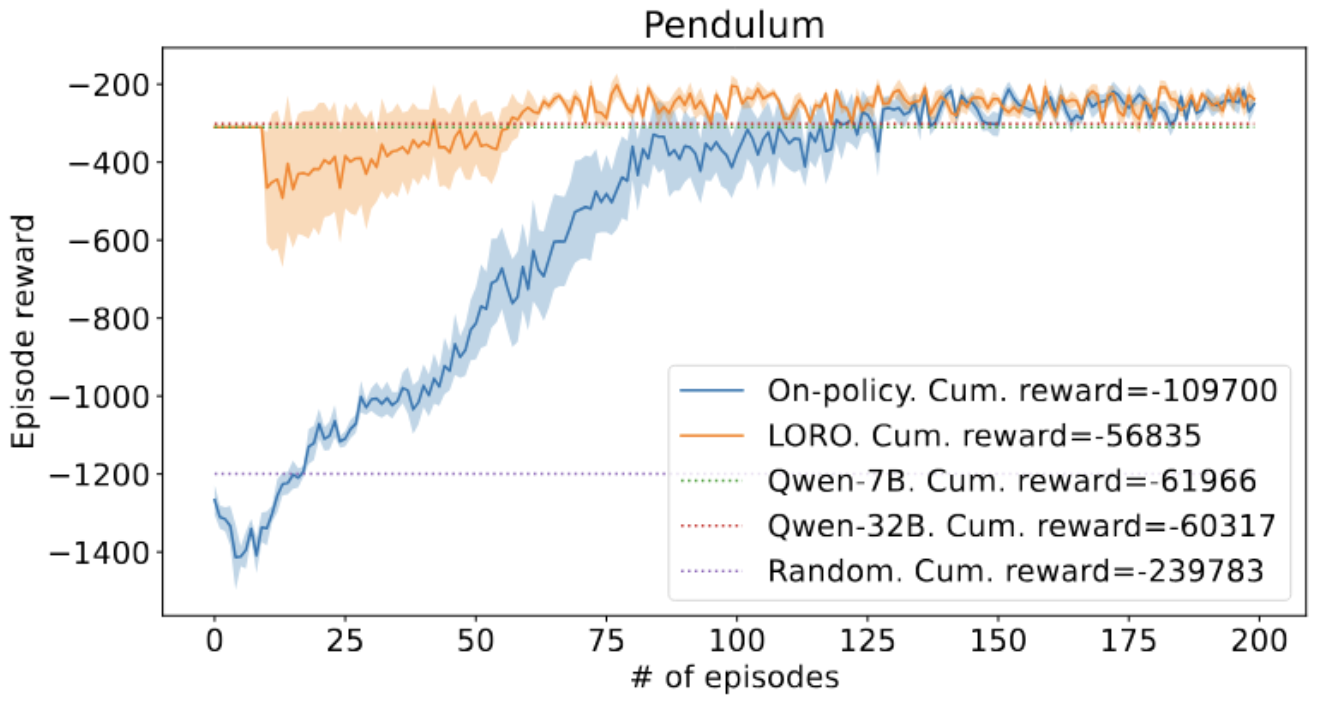
We investigate the usage of Large Language Model (LLM) in collecting high-quality data to warm-start Reinforcement Learning (RL) algorithms for learning in some classical Markov Decision Process (MDP) environments. In this work, we focus on using LLM to generate an off-policy dataset that sufficiently covers state-actions visited by optimal policies, then later using an RL algorithm to explore the environment and improve the policy suggested by the LLM. Our algorithm, LORO, can both converge to an optimal policy and have a high sample efficiency thanks to the LLM’s good starting policy. On multiple OpenAI Gym environments, such as CartPole and Pendulum, we empirically demonstrate that LORO outperforms baseline algorithms such as pure LLM-based policies, pure RL, and a naive combination of the two, achieving up to 4\times the cumulative rewards of the pure RL baseline.
@article{duong2025improvingdataefficiencyreinforcementlearning, title = {Improving the Data-efficiency of Reinforcement Learning by Warm-starting with LLM}, author = {Duong, Thang and Yang, Minglai and Zhang, Chicheng}, year = {2025}, eprint = {2505.10861}, archiveprefix = {arXiv}, primaryclass = {cs.LG}, url = {https://arxiv.org/abs/2505.10861}, google_scholar_id = {UeHWp8X0CEIC}, } - ArXiv
 Word2VecGD: Neural Graph Drawing with Cosine-Stress OptimizationMinglai Yang, and Reyan Ahmed2025
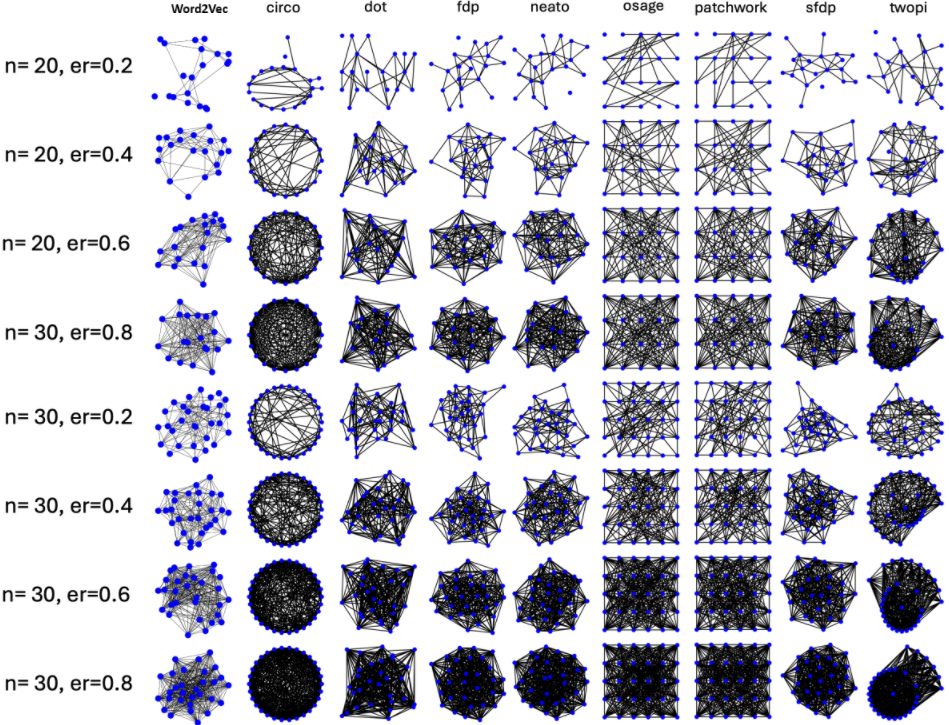
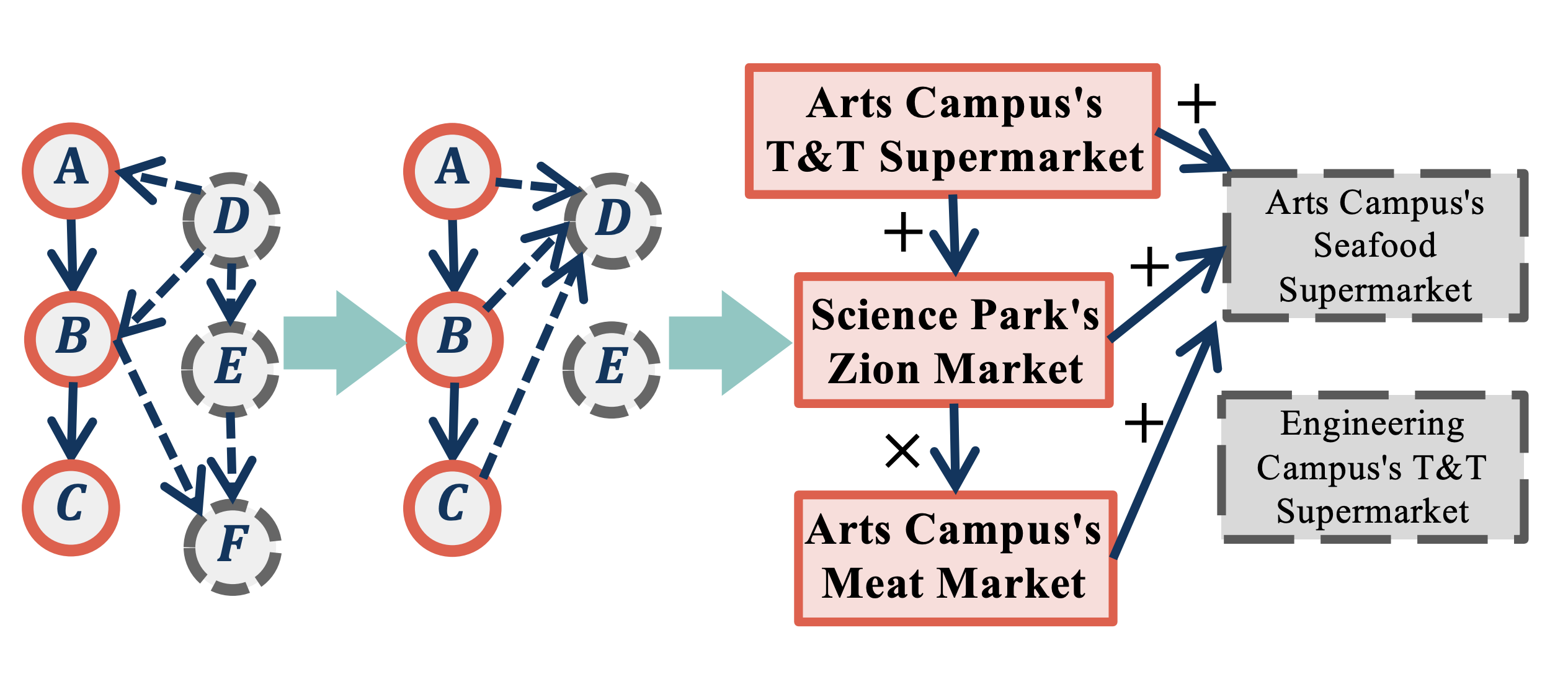
We propose a novel graph visualization method leveraging random walk-based embeddings to replace costly graph-theoretical distance computations. Using word2vec-inspired embeddings, our approach captures both structural and semantic relationships efficiently. Instead of relying on exact shortest-path distances, we optimize layouts using cosine dissimilarities, significantly reducing computational overhead.
@misc{yang2025word2vecgd,
  title = {Word2VecGD: Neural Graph Drawing with Cosine-Stress Optimization},
  author = {Yang, Minglai and Ahmed, Reyan},
  year = {2025},
  eprint = {2509.17333},
  archiveprefix = {arXiv},
  primaryclass = {cs.LG},
  url = {https://arxiv.org/abs/2509.17333},
  google_scholar_id = {eQOLeE2rZwMC},
}


2024
- MCM
 Dynamic Balances: Modelling Variable Sex Ratios in Lamprey Populations for Ecosystem ManagementM. Yang, M. Abbasi, and S. SoporboevBest Paper at University of Arizona Math ModelingInternational Mathematical Contest in Modeling (MCM)., Tucson, Arizona. ** The Problem can be found here , May 2024
We developped an Adaptive Population Control (ACC) model that explains the skewed sex ratio at high and low levels of resource availability as a control measure by lamprey to maximize their growth rate. We find that the advantage of a variable sex ratio is greatest under extremely poor or extremely suitable environmental conditions. Next, to account for the male skewed populations of lamprey at high densities, we develop a modified logistic growth model that allows for variable carrying capacity for males and females. Differential Carrying Capacity (DCC) model accurately predicts the optimal sex ratio to achieve the maximal growth rate at various population densities. In line with ACC, we use Aquatic Nutritional Network (ANN), a niche width differential equation model is developed by integrating concepts from Lotka-Volterra equations. to study the dynamics of lamprey and their native prey/predator. We find that variable sex ratios allow time for regeneration of the native prey in Lamprey.